What do these AI SEO case studies prove?
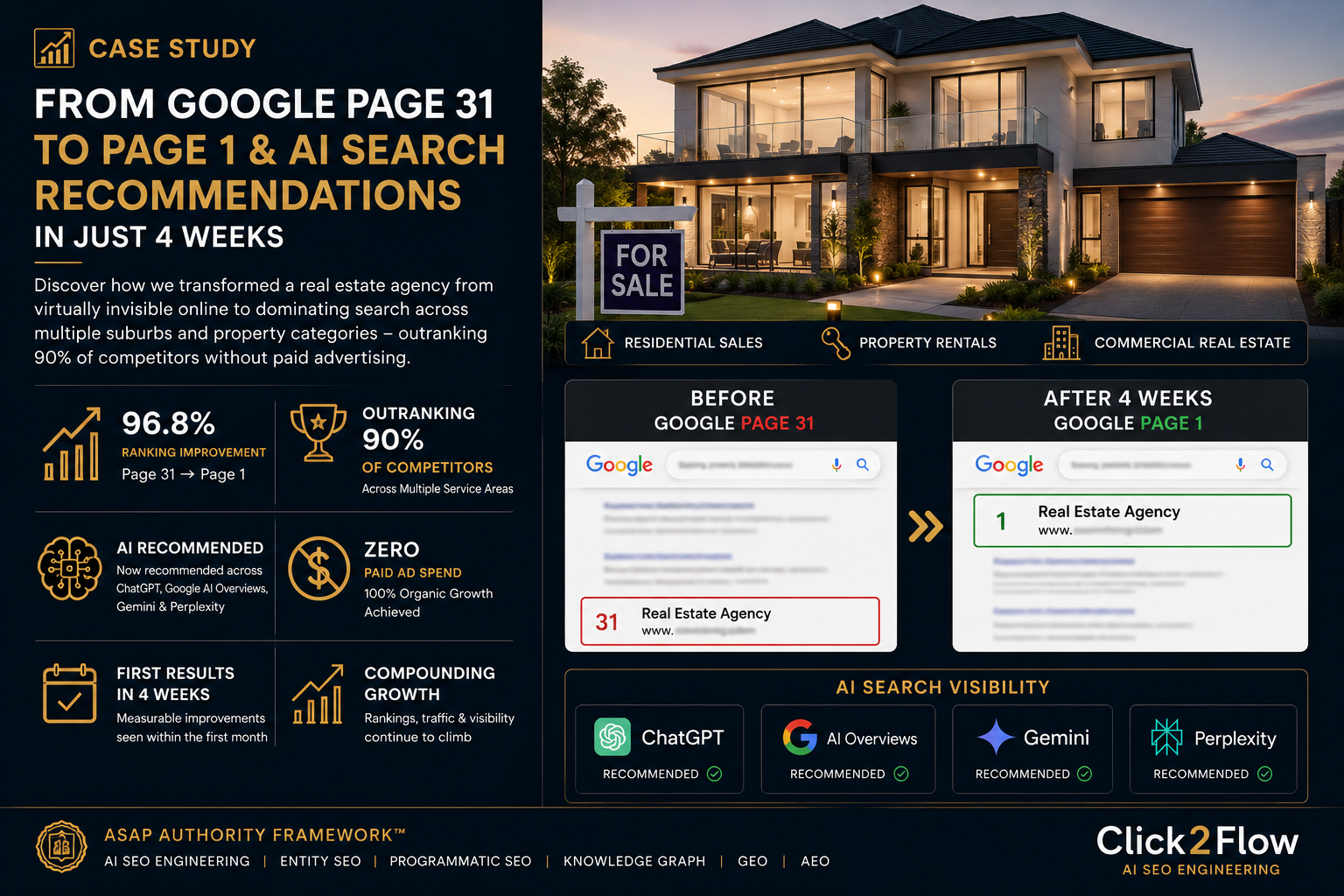
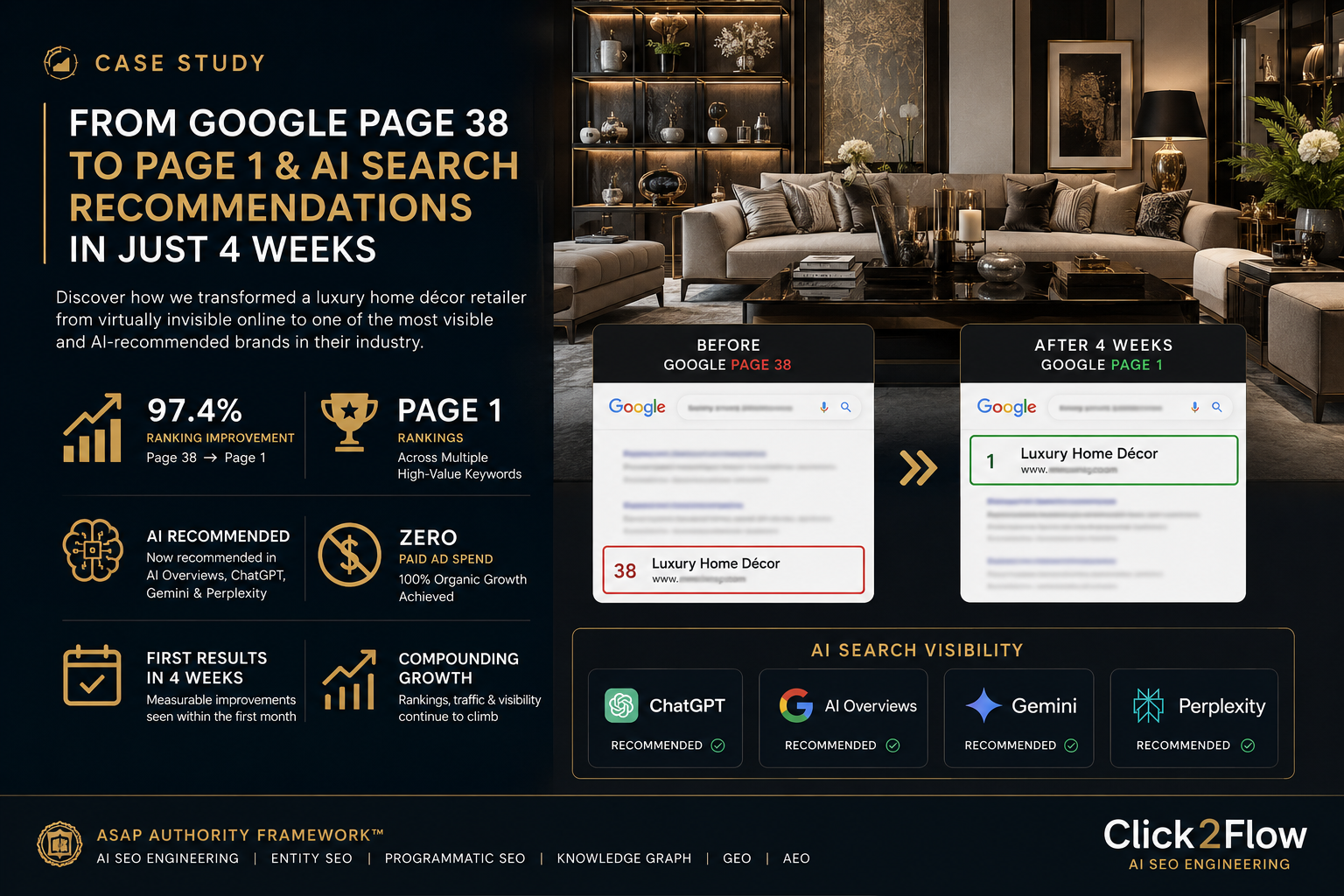
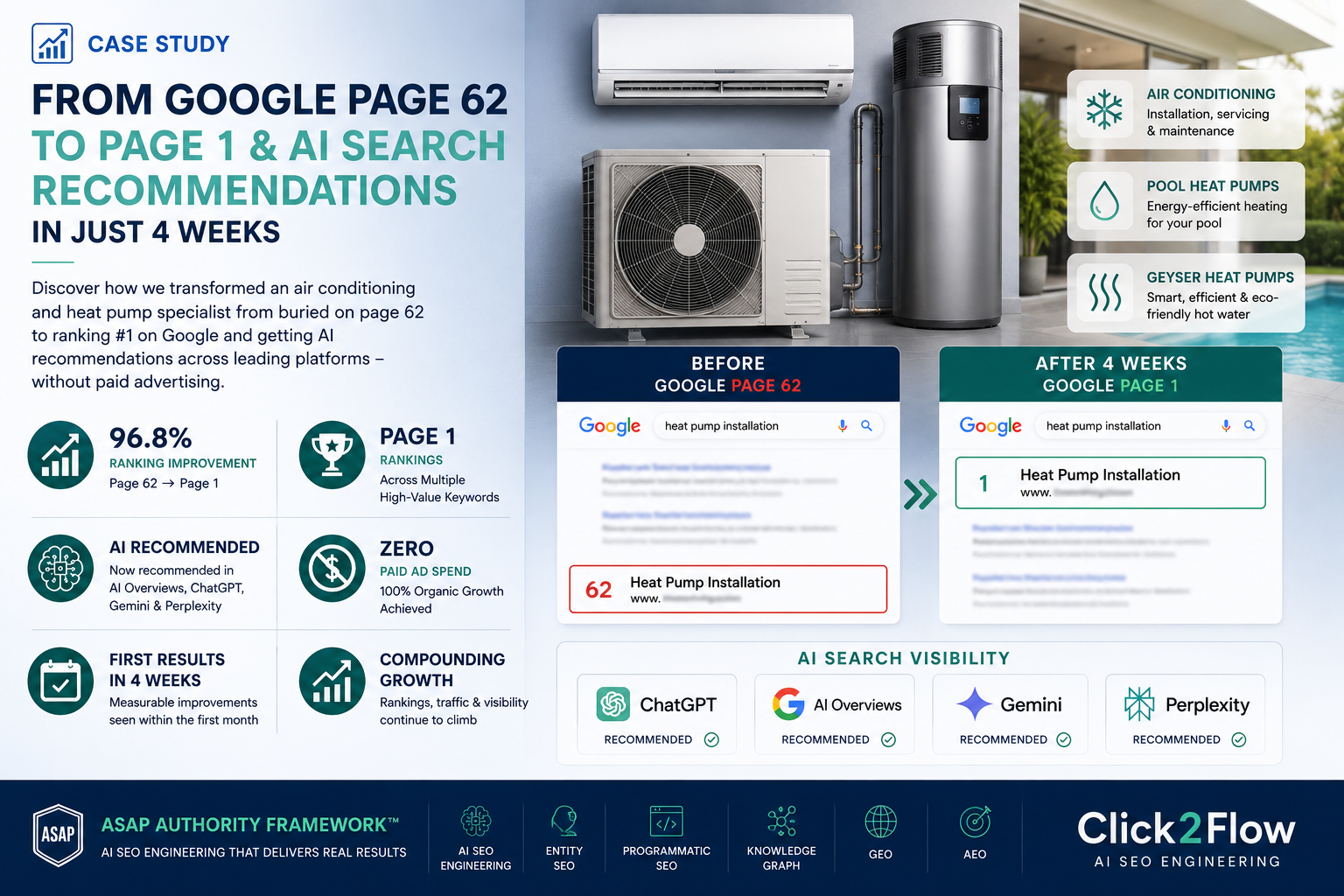
These case studies demonstrate the measurable results achieved through Click2Flow's AI SEO Engineering methodology across multiple industries, including luxury retail, HVAC, real estate and e commerce. Each project documents how businesses improved their visibility on Google while also becoming more discoverable across AI powered search platforms such as ChatGPT, Google AI Overviews, Gemini and Perplexity. Rather than relying on paid advertising, every strategy focused on building long term authority through Entity SEO, Programmatic SEO (PSEO), Knowledge Graph Optimisation, semantic content architecture and structured data engineering. The featured results include businesses moving from Google Page 62, Page 38 and Page 31 to Page 1 within weeks, while simultaneously increasing AI recommendations and strengthening their digital authority. These case studies provide real world examples of how AI SEO Engineering can transform search performance, helping prospective clients understand both the methodology and the business outcomes that can be achieved through sustainable organic growth.
What makes AI SEO Engineering different from traditional SEO?
Traditional SEO focuses primarily on improving keyword rankings within conventional search engine results. AI SEO Engineering takes a much broader approach by optimising how search engines and artificial intelligence systems understand, interpret and recommend a business. At Click2Flow, this includes Entity SEO, semantic search optimisation, Knowledge Graph development, advanced structured data, Programmatic SEO and AI ready content architecture. The objective is not only to improve Google rankings but also to increase the likelihood that platforms such as ChatGPT, Google AI Overviews, Gemini and Perplexity recognise your organisation as a trusted authority. This dual optimisation strategy enables businesses to gain visibility across both traditional search engines and AI powered discovery experiences, creating a sustainable competitive advantage as search behaviour continues to evolve.
How long does AI SEO Engineering take to produce results?
Every business has a different level of competition, domain authority and technical foundation, so timeframes vary depending on the project. In the case studies presented on this page, measurable improvements were observed within the first four weeks of implementation, with continued growth occurring month after month as authority signals strengthened. AI SEO Engineering is designed to build long term authority rather than temporary ranking improvements. As Google and AI search platforms continue to crawl, interpret and validate the relationships between your content, entities, structured data and external authority signals, visibility generally compounds over time. While no ethical agency can guarantee identical results for every business, a properly executed AI SEO strategy creates a foundation that continues generating value long after implementation has begun.
Can AI SEO replace Google Ads?
AI SEO Engineering is not intended to replace Google Ads in every situation, but it can significantly reduce dependence on paid advertising by building sustainable organic visibility. Paid advertising generates traffic only while you continue spending money. Once the advertising budget stops, the visibility usually disappears. AI SEO, on the other hand, focuses on earning long term authority across Google Search and AI powered search platforms. As demonstrated throughout these case studies, businesses achieved substantial growth without relying on paid advertising because their websites became trusted sources of information that search engines and AI systems could confidently recommend. Many organisations use AI SEO alongside advertising initially before gradually reducing ad spend as their organic visibility strengthens.
What is Programmatic SEO (PSEO) and why is it important?
Programmatic SEO (PSEO) is the process of creating large numbers of highly relevant landing pages using structured templates, entity relationships and search intent rather than manually producing every page individually. When implemented correctly, Programmatic SEO allows businesses to target multiple products, services, industries, suburbs, cities and customer journeys while maintaining consistent quality and semantic relevance. Within Click2Flow's AI SEO Engineering methodology, Programmatic SEO is used to expand topical authority, increase keyword coverage and strengthen geographic relevance. This enables Google and AI search engines to better understand the breadth of a business's expertise, increasing opportunities for both rankings and AI recommendations across a much larger range of commercial search queries.
Why are entities and Knowledge Graphs important for AI search?
Modern search engines no longer rely only on keywords. They increasingly use entities to understand people, businesses, products, services, organisations and locations, together with the relationships between them. Knowledge Graph Optimisation strengthens these relationships by providing structured, machine readable information that helps Google and AI platforms accurately identify and connect your business with relevant topics and industries. This improves semantic understanding, increases trust and enhances the probability of appearing within AI generated answers and recommendations. Entity SEO has therefore become one of the most important components of AI SEO Engineering because it enables machines to understand what your business is, what it offers and why it should be recommended.
Which AI search platforms does Click2Flow optimise for?
Click2Flow's AI SEO Engineering methodology is designed to improve discoverability across a wide range of AI powered search experiences rather than focusing on a single platform. Depending on the project, strategies are implemented to improve machine readability, entity relationships, structured data and semantic authority in ways that support visibility within platforms such as ChatGPT, Google AI Overviews, Gemini, Perplexity and other emerging AI search technologies. Because these systems evaluate authority differently from traditional search engines, the optimisation process focuses on creating trusted, structured and highly relevant information that can be confidently interpreted, cited and recommended across multiple AI ecosystems.
Are these case study results achieved through paid advertising?
No. The projects featured on this page focus specifically on organic growth achieved through Click2Flow's AI SEO Engineering methodology. The improvements in Google rankings, AI recommendations and authority development documented within these case studies were achieved without relying on Google Ads or other paid advertising campaigns. Instead, each project focused on strengthening technical SEO, entity relationships, structured data, semantic relevance, Programmatic SEO, topical authority and Knowledge Graph optimisation. This approach creates sustainable visibility that continues to grow over time rather than disappearing when advertising budgets are paused.
Can AI SEO Engineering work for my industry?
AI SEO Engineering is not limited to a single sector. The principles demonstrated throughout these case studies can be adapted for businesses operating in professional services, healthcare, manufacturing, legal services, finance, education, construction, retail, property, hospitality and many other industries. While implementation strategies differ depending on competition, search intent and business objectives, the underlying methodology remains focused on strengthening authority, improving machine understanding and increasing discoverability across both traditional and AI powered search. Every strategy is customised around the client's market, competition, services and commercial goals rather than applying a one size fits all SEO campaign.
Why should I choose Click2Flow for AI SEO Engineering?
Click2Flow specialises in AI SEO Engineering, combining technical SEO, Entity SEO, Programmatic SEO, Knowledge Graph Optimisation, semantic search architecture and AI search optimisation into a single integrated methodology. Rather than focusing exclusively on keyword rankings, every strategy is designed to increase the likelihood of being understood, trusted and recommended by both search engines and AI platforms. The case studies presented on this page demonstrate how this methodology has helped businesses across multiple industries achieve Page 1 Google rankings, AI recommendations and sustainable organic growth without relying on paid advertising. Every implementation is tailored to the client's objectives, competitive landscape and available budget, ensuring that the strategy aligns with measurable business outcomes rather than vanity metrics alone.