I recently sat in a consultation with a business owner who wanted advice on improving their Google Ads performance.
At first, the conversation sounded familiar.
“We need more leads.” “Our ad performance has slowed.” “Our competitors are still running ads aggressively.”
Then I asked a simple question:
“How much have you invested into Google Ads over the years?”
The answer shocked even me.
Between R30,000 and R70,000 per month over the last 8 years.
That works out to roughly between R2.8 million and R4.8 million invested into paid visibility over time.
So I asked the next question.
“What do you have to show for that investment today?”
Silence.
Not because the business failed. Not because the company lacked effort. Not because leads never came in.
But because, after nearly a decade of spending, they still ranked around page 43 on Google organically and remained almost completely invisible across AI discovery platforms and Large Language Models.
No organic authority. No meaningful search dominance. No machine trust. No AI recommendation visibility.
At that moment, the business owner realised something that many companies still do not fully understand:
They had spent years renting visibility instead of building it.
This is one of the biggest strategic mistakes businesses continue making today.
Many companies are not actually building long-term visibility strategies. They are simply copying competitor behaviour without fully understanding the long-term strategy behind what competitors are doing.
A competitor runs Google Ads aggressively, so they do the same. A competitor dominates paid search, so they chase the same space. A competitor spends more, so they increase spend too.
But very few businesses stop to ask: “What is this actually building long term?”
In this particular case, the business had spent nearly 8 years investing heavily into paid acquisition without properly measuring long-term ROI, authority growth, organic visibility progression, or strategic digital asset development.
The frightening part is this: they are not alone.
Many businesses have become addicted to short-term lead generation while neglecting long-term discoverability, authority, and machine-recognisable trust.
I advised the client to shift strategy.
Not to abandon Google Ads completely, because paid advertising still has value when used strategically, but to begin strengthening the brand organically across both Google and AI discovery systems while maintaining a smaller paid acquisition layer to support lead flow during the transition.
The goal should have been: Build organic authority while using paid visibility tactically, not depend entirely on rented traffic forever.
Unfortunately, the client disagreed.
Even after the consultation, they remained convinced that AI SEO adoption is still premature and that consumer decision-making behaviour has not shifted enough to justify investing into AI discoverability and organic authority frameworks.
To their credit, they did agree to finally begin measuring ROI and performance KPIs properly moving forward.
But measurement alone does not solve the core strategic problem.
You cannot measure your way out of a weak long-term visibility strategy.
Eventually the client asked if I would take on the project.
I declined.
Not because I couldn’t run the campaigns. Not because I doubted my ability.
But because I refuse to take a client’s money for a strategy I fundamentally believe is incomplete and unsustainable long term. Over the past few years, I’ve built a strong reputation within the AI SEO industry by delivering measurable visibility results for clients within relatively short timeframes, and I intend to protect that reputation carefully.
I will never take on work that I am convinced does not create meaningful long-term value for a client’s business. Most professionals in this industry understand how this ultimately ends, when a weak strategy fails to deliver sustainable growth, accountability eventually falls on the strategist or agency managing it, regardless of the warnings given upfront.
At some point, someone takes the blame.
I would rather walk away from a project than knowingly participate in a strategy I believe will leave a business in the exact same position years later: still paying for visibility they do not truly own.
I believe businesses need to hear uncomfortable truths more often.
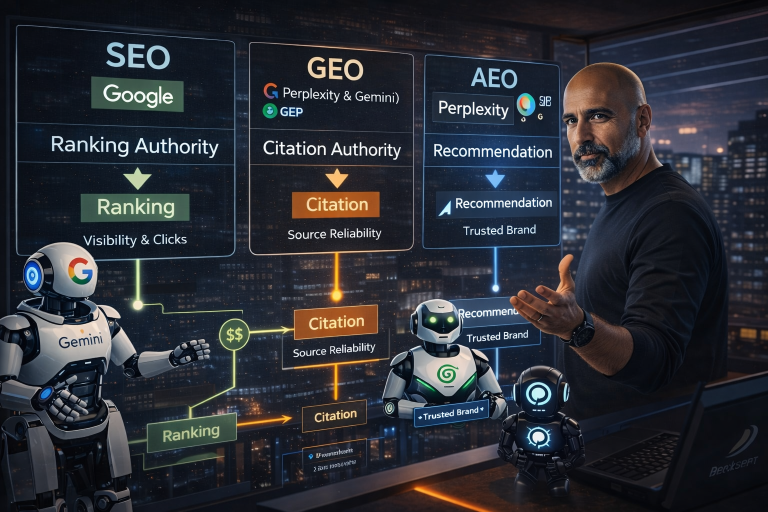
Search behaviour is changing. AI-assisted discovery is growing rapidly. Recommendation-based search is becoming increasingly influential. Machine trust is becoming commercially valuable.
And businesses that continue relying only on paid visibility may eventually discover they built traffic pipelines without ever building true authority.
The future belongs to businesses that own visibility, not businesses that continuously rent it.
So now I’ll ask the question openly:
Do you think I made the right decision declining the project?
Comments
Comments settings
60

LikeCommentShare
Add a comment…
Open Emoji Keyboard