What is AI SEO Engineering?
AI SEO Engineering represents a fundamental shift in search optimization. Unlike traditional SEO, which focuses primarily on keywords, backlinks, and on-page elements, AI SEO Engineering builds structured digital authority systems that AI-driven search engines and recommendation platforms can interpret, trust, and cite.
Modern search algorithms and AI platforms, including Google SGE, ChatGPT, Perplexity, and Claude, prioritize entities, semantic relationships, contextual trust signals, and structured knowledge. Traditional SEO tactics alone no longer guarantee visibility.
Click2Flow developed the A-S-A-P Authority Model™, a proprietary AI SEO framework, to systematically build authority. This methodology ensures businesses are recognized not only by search engines but also by AI-powered discovery and generative platforms.
Why Traditional SEO is No Longer Enough
Traditional SEO focuses on three main pillars:
Keywords
Backlinks
On-page optimization
While effective in the past, these strategies fail to capture full authority signals that AI-driven search engines evaluate today. Platforms now look for:
Entity recognition: Understanding a business as a distinct concept.
Contextual relevance: How services and topics relate to each other.
Trust and credibility signals: Consistent mentions, structured citations, and validation of expertise.
Semantic topic coverage: Comprehensive coverage rather than isolated page optimization.
Businesses relying solely on traditional SEO risk being invisible in AI-generated summaries, recommendation engines, and conversational search results.
How AI SEO Engineering Works
AI SEO Engineering combines structured architecture, semantic topic modeling, authority amplification, and generative engine optimization (GEO) to create a system recognized as credible by AI and search engines.
Entity Architecture
A digital entity represents a business as a distinct searchable concept in AI knowledge graphs. Proper entity architecture ensures AI systems understand:
The business’s core offerings
Industry expertise
Relationships between services and topics
Without structured entity recognition, even optimized pages may fail to appear in AI-driven results.
Semantic Topic Networks
Content is structured into topic clusters, connecting pillar pages, supporting articles, knowledge resources, and FAQs. This signals to AI that your website is a central knowledge hub, increasing citation potential and visibility.
Authority Signals
AI SEO Engineering strengthens credibility through:
Consistent citations on trusted platforms
Mentions in authoritative content
Schema markup and structured data
Semantic internal linking
These signals reinforce trust, making AI and search engines more likely to recommend your brand.
Generative Engine Optimization (GEO)
GEO ensures content is AI-readable, meaning AI can:
Extract expertise signals
Interpret offerings
Summarize information accurately
Reference the brand in generative responses
By structuring content hierarchies, embedding entities, and optimizing semantic relationships, GEO improves visibility in AI summaries and recommendation platforms.
The A-S-A-P Authority Model™ and AI SEO Engineering
The A-S-A-P Authority Model™ is Click2Flow’s proprietary framework for AI SEO Engineering. Its four layers include:
Authority Foundation – Build a structured base of trust and expertise.
Signal Amplification – Reinforce authority across digital ecosystems.
AI Discoverability – Optimize assets so AI systems can find, interpret, and cite them.
Platform Authority – Expand credibility across platforms for long-term visibility.
Learn more about the A-S-A-P Authority Model™ and how it can elevate your digital authority.
Benefits of AI SEO Engineering
Higher visibility in AI-driven search and generative answers
Consistent entity recognition across knowledge graphs
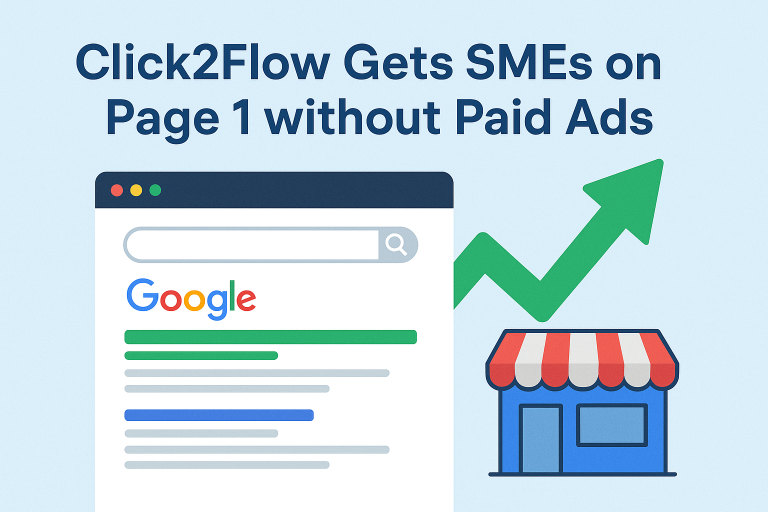
Reduced reliance on paid ads
Improved credibility across digital platforms
Predictable organic growth and long-term authority
Implementing AI SEO Engineering in Your Organization
Step 1: Entity Mapping
Identify core services, topics, and their relationships within the digital ecosystem.
Step 2: Semantic Topic Clusters
Create pillar pages, supporting content, and FAQs that cover the full spectrum of the business domain.
Step 3: Internal Linking
Connect pages semantically to strengthen topic relevance and AI understanding.
Step 4: Schema Markup
Apply structured data for entities, FAQs, and articles to make content AI-readable.
Step 5: Authority Amplification
Build citation networks and references on trusted external sites.
Step 6: Continuous Optimization
Monitor AI visibility, knowledge graph inclusion, and search performance to refine authority signals.
All steps align with the A-S-A-P Authority Model™ for sustainable results.
AI-Citation Optimized FAQ Section (10 Questions)
1. What is AI SEO Engineering?
AI SEO Engineering is a methodology that builds structured digital authority, allowing AI search engines to recognize, trust, and reference a business. Unlike traditional SEO, it focuses on entity architecture, semantic content clusters, authority signals, and generative engine optimization (GEO). By using frameworks like the A-S-A-P Authority Model™, businesses can improve visibility in AI-driven search, receive citations, and enhance discoverability.
2. Why is AI SEO different from traditional SEO?
Traditional SEO emphasizes keywords and backlinks. AI SEO focuses on authority, trust, semantic relevance, and AI discoverability. AI evaluates entity credibility, topic coverage, citations, and context. Implementing AI SEO ensures that businesses appear in AI summaries, recommendations, and knowledge panels.
3. What are authority signals in AI SEO?
Authority signals include external mentions, consistent citations, schema, internal linking, and semantic coverage. Strong signals indicate credibility to AI systems, increasing the chances of being cited in generative answers and AI-driven search.
4. How does the A-S-A-P Authority Model™ relate to AI SEO?
The A-S-A-P Authority Model™ structures AI SEO implementation into four layers: Authority Foundation, Signal Amplification, AI Discoverability, and Platform Authority. It guides businesses in building measurable authority for AI systems to recognize.
5. Who should implement AI SEO Engineering?
Enterprise organizations, B2B companies, professional services, and tech firms that rely on digital discoverability should implement AI SEO. The methodology ensures strong AI visibility and citation potential.
6. What is Generative Engine Optimization (GEO)?
GEO structures content to be AI-readable. It helps AI extract expertise, interpret offerings, summarize information, and reference brands accurately.
7. Can AI SEO reduce the need for paid advertising?
Yes. By building authority and discoverability, AI SEO reduces reliance on paid channels while attracting organic, high-intent traffic from AI-driven platforms.
8. How do semantic topic clusters improve AI discoverability?
Clusters demonstrate comprehensive coverage, signaling to AI that your website is a knowledge hub. This increases citation likelihood in AI-generated summaries.
9. How does AI SEO help with knowledge graph inclusion?
By defining entities, structuring relationships, and applying schema, AI SEO ensures recognition in knowledge graphs, boosting visibility in AI search and panels.
10. What are the long-term benefits of AI SEO Engineering?
AI SEO builds a scalable digital authority system, increasing discoverability, credibility, AI citations, and search rankings over time, while reducing dependency on paid marketing.